Water dripping through a bathroom ceiling, a damp patch spreading across a bedroom wall, or a balcony that leaks into the unit below after heavy rain is more than a cosmetic problem. It means water has found a path through the building, and leaving it unresolved can allow minor defects to develop into damaged finishes, mould, concrete deterioration or more extensive repairs.
The bigger problem is often not the leak itself, but how it is diagnosed. A contractor who simply seals the visible stain without identifying where the water is entering may provide only a temporary fix. When the leak returns, the property owner ends up paying for the same problem twice.
A reliable waterproofing contractor in Singapore should therefore do more than apply a waterproofing product. The contractor should inspect the site, identify the likely source of water ingress, recommend a method suited to the cause and building conditions, explain the proposed materials, and provide a clear written scope, price and warranty.
Singapore’s combination of heavy rainfall, high humidity, strong sunlight and dense residential and commercial development makes proper diagnosis and material selection particularly important. The correct solution for a bathroom floor is not necessarily the correct solution for a concrete roof, basement, planter box or inter-floor leak.
This guide explains what waterproofing contractors do, the most common leak problems in Singapore, how to evaluate a contractor, which waterproofing methods are commonly used, how HDB and condominium inter-floor leaks are handled, what affects waterproofing costs, and what questions to ask before hiring.
What Does a Waterproofing Contractor Do?
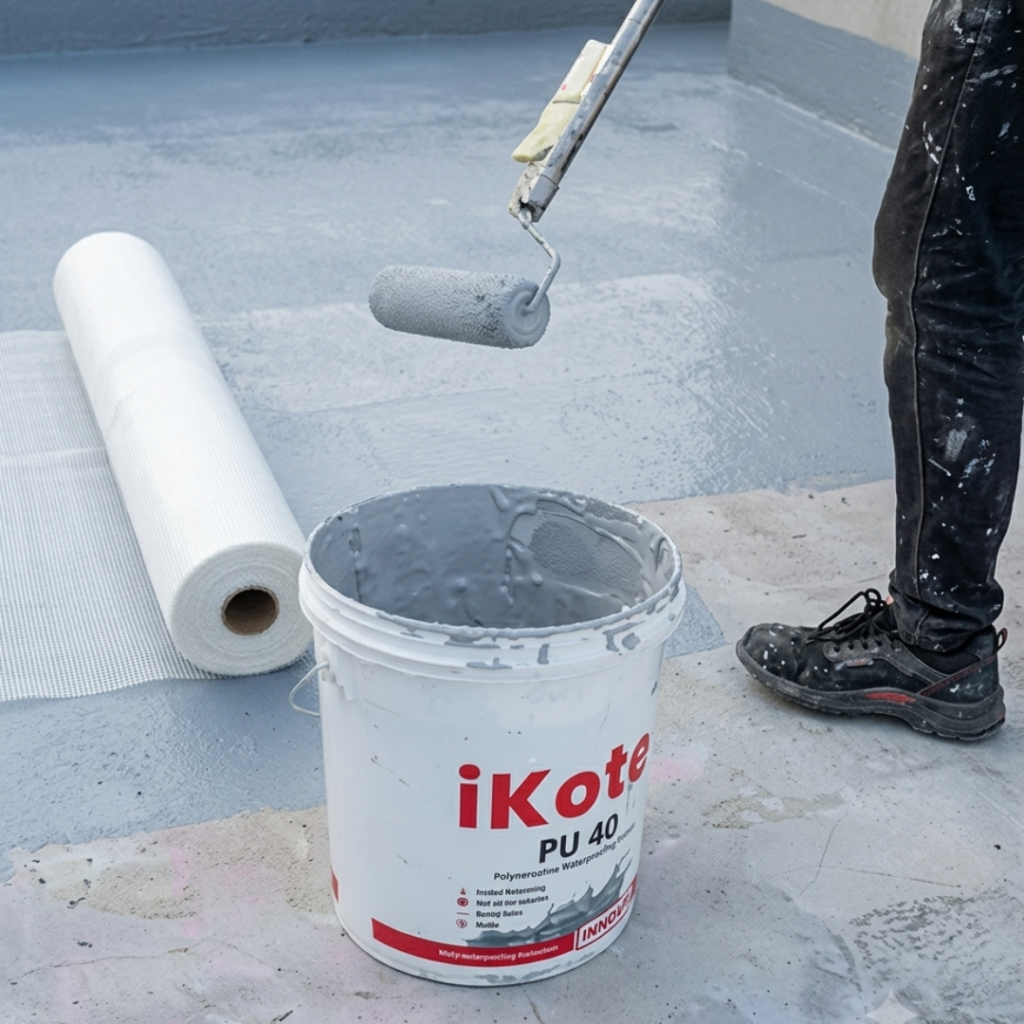
A waterproofing contractor identifies where water is entering a building and determines the most appropriate way to control or stop the ingress. Waterproofing work can involve bathrooms, kitchens, roofs, terraces, balconies, planter boxes, external walls, windows, basements, lift pits and car park decks.
A proper waterproofing job starts before any membrane, coating or grout is applied. The contractor should first investigate the source of the leak. Depending on the situation, this may involve visual inspection, checking joints and pipe connections, examining drainage, moisture checks or controlled water testing.
This matters because the point where water becomes visible is not always where it entered. Water can travel through concrete slabs, screed, wall cavities, joints and pipes before appearing as a ceiling stain or damp patch.
Once the source has been identified, the contractor can determine whether the problem requires localised repair, injection, recoating, membrane replacement, re-screeding or a more comprehensive waterproofing system.
What Are the Most Common Waterproofing Problems in Singapore?
Water ingress in Singapore buildings commonly occurs around bathrooms and kitchens, exposed roofs and terraces, balconies, planter boxes, external walls, windows and below-ground structures. Each environment presents different challenges.
Bathrooms, Kitchens and Inter-Floor Leaks
In HDB flats and condominiums, water appearing on the ceiling of a lower unit can originate from the wet area above. Deteriorated waterproof membranes and screed, damaged floor traps, leaking pipes, failed joints or renovation work that has disturbed existing waterproofing can all contribute to seepage.
A visible ceiling stain therefore does not automatically mean the ceiling itself needs waterproofing. The source may be the floor, bathroom, pipework or waterproofing system in the unit above.
Roofs, Terraces, Balconies and Planter Boxes
Exposed areas experience Singapore’s rain, humidity and strong sunlight throughout the year. Concrete can develop cracks through shrinkage, movement and weather exposure, while existing waterproofing layers and sealants can deteriorate over time.
Planter boxes present a different challenge because they are exposed to frequent moisture. Poor drainage, failed waterproofing details and inadequate treatment around corners or penetrations can allow water to migrate into surrounding structures.
Roofs and terraces can also develop ponding when drains are blocked or surface falls are inadequate. Standing water increases the opportunity for moisture to enter through weak points.
External Walls and Windows
Wind-driven rain can enter through cracks in external walls, failed sealant joints and poorly sealed window interfaces. The resulting moisture may appear indoors as bubbling paint, damp patches or discolouration.
Because water can travel before becoming visible, the source may be above or beside the affected interior area.
Basements, Lift Pits and Car Parks
Below-ground structures can experience water pressure from surrounding soil, particularly after prolonged rainfall. Construction joints, cracks and penetrations can become pathways for water.
Car park decks face an additional challenge because the waterproofing system may need to withstand both weather exposure and vehicle traffic. A suitable system therefore needs to be selected according to the actual environment rather than simply the presence of a leak.
What Makes a Waterproofing Contractor Trustworthy in Singapore?
A reliable contractor should be able to demonstrate relevant experience, inspect the site before providing a final recommendation, explain the proposed repair method and provide clear written terms.
Look for Relevant Local Experience
Experience matters because waterproofing systems behave differently depending on exposure, substrate and building use. A contractor who regularly handles Singapore homes may understand common issues such as HDB bathroom leaks, inter-floor seepage, planter boxes and exposed concrete roofs.
For larger projects, it is also useful to ask whether the contractor has experience with commercial, industrial or institutional buildings where access, project scheduling and technical specifications may be more demanding.
Reviews and references are more useful when they relate to projects similar to yours. A contractor experienced mainly in bathroom repairs may not necessarily be the right choice for a large industrial roof or basement waterproofing project.
Check the Relevant Registration or Accreditation
For HDB renovation works, HDB states that homeowners must engage contractors listed in its Directory of Renovation Contractors (DRC). HDB also specifies renovation requirements covering matters such as hacking, working hours and the protection of the building and neighbouring units.
For contractors working in the broader construction sector, BCA’s Contractors Registration System (CRS) includes a specific CR13 Waterproofing Installation workhead. However, CRS registration is not a blanket requirement for every private residential waterproofing job. Since 1 June 2025, firms hiring construction S Pass or Work Permit holders must register with CRS, while contractors also need CRS registration for relevant public-sector construction tenders and projects. The BCA e-Directory can be used to verify a firm’s registration and workhead where relevant.
CaseTrust accreditation can also provide useful consumer-protection information for homeowners considering renovation businesses. CaseTrust’s renovation scheme assesses areas including business practices, communication, personnel and systems, with measures such as prepayment protection for accredited businesses. It should be treated as an additional trust signal rather than a universal requirement for every waterproofing contractor.
Insist on a Proper Site Inspection
A contractor who gives a firm diagnosis without seeing the affected area should be treated cautiously.
The inspection should identify the likely entry point, assess the surrounding substrate and determine whether the problem is caused by waterproofing, plumbing, drainage, joints or another building defect.
A good contractor should also be willing to explain why the proposed repair addresses the underlying cause rather than simply covering the visible symptom.
Get the Scope, Price and Warranty in Writing
A proper quotation should describe the affected area, preparation work, repair method, materials, labour and any additional work that may be required.
Warranty terms should also be clear. Instead of accepting a vague statement such as “warranty provided”, ask how long the warranty lasts, whether it covers workmanship, what exclusions apply and what happens if the leak returns.
The warranty should correspond to the actual scope of work. A small localised repair and a complete roof waterproofing system should not necessarily carry identical terms.
Which Waterproofing Methods Are Commonly Used in Singapore?
The appropriate method depends on the location and cause of the leak, the condition of the existing surface, whether water is actively entering and whether the area requires flexibility, traffic resistance, UV resistance or compatibility with existing materials.
Cementitious Waterproofing
Cementitious systems are commonly applied to concrete and masonry and can be used in suitable bathrooms, wet areas, water-retaining structures and below-ground applications.
Traditional rigid systems may be less suitable where significant movement is expected. Polymer-modified flexible cementitious systems can provide greater movement tolerance.
ASW’s iKote CM 40X is one example of a flexible cementitious waterproofing system designed for applications including concrete roofs, wet areas, lift pits and other concrete or masonry surfaces.
Polyurethane Injection Grouting
Polyurethane injection grouting is used when water is actively entering through cracks, joints or voids in concrete.
The resin is injected through ports installed along the affected crack or joint. Depending on the formulation and application, the material expands or cures to form a seal within the water pathway.
This approach can be useful where extensive hacking is undesirable, but it should not automatically be treated as a complete waterproofing solution. If the surrounding waterproofing system has deteriorated, the contractor should explain whether additional treatment is necessary.
Liquid-Applied Membranes
Liquid-applied membranes cure into a continuous waterproofing layer without the seams associated with sheet membranes. They can be useful for roofs, terraces, balconies, planter boxes and wet areas, particularly where there are numerous pipes, drains, corners and other details.
Polyurethane and hybrid urethane systems can provide flexibility and crack-bridging characteristics appropriate to certain exposed applications.
ASW’s iKote PU40 is described as a hybrid polyurethane dispersion-based waterproofing coating with UV resistance and crack-bridging ability, with applications including concrete roofs, terraces, balconies, toilets and shower areas.
Sheet Membranes
Sheet membranes are installed in rolls and joined at overlaps and seams. They can be suitable for large, relatively straightforward roof areas, but the installation quality around joints, drains, corners, penetrations and changes in level is critical.
A sheet membrane is only as reliable as its weakest joint or detail, which is why contractor workmanship remains important even when the membrane itself is high quality.
Crystalline Waterproofing
Crystalline systems are designed to react within suitable concrete and form crystalline structures that reduce certain water pathways.
They can be considered for appropriate concrete structures, particularly where reducing water penetration through the concrete itself is part of the waterproofing strategy. The system should still be selected according to the substrate and exposure rather than assumed to be suitable for every leak.
Clear Waterproofing Coatings
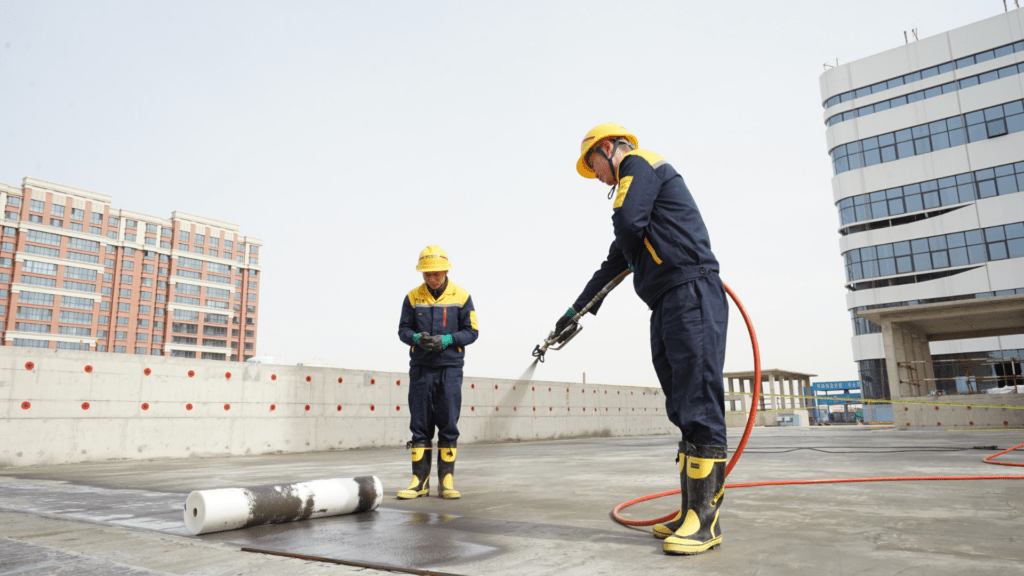
Clear coatings can sometimes be applied over existing tiles and grout where the objective is to reduce minor seepage without removing the finished surface.
They are not appropriate for every situation. If the underlying waterproofing has failed extensively, or if the actual problem is a leaking pipe, damaged screed or structural defect, a clear coating may only conceal the problem temporarily.
Should You Repair the Leak or Re-Waterproof the Entire Area?
Not every leak requires complete waterproofing.
A small defect around a pipe penetration, joint or localised crack may be suitable for targeted repair when the surrounding waterproofing remains in good condition.
A larger intervention may be appropriate when the waterproofing has widespread deterioration, repeated failures, extensive cracking, ponding or poor adhesion.
The contractor should therefore explain the condition of the existing system before recommending full replacement. If the only reason for a complete re-waterproofing is that it is easier for the contractor, rather than because the existing system has actually failed, a second opinion may be worthwhile.
Who Is Responsible for an Inter-Floor Leak in an HDB Flat?
HDB’s current guidance states that owners are responsible for maintaining their respective flats, including the floor and ceiling slabs. For an inter-floor ceiling leak, the upper and lower flat owners generally need to arrange the investigation and repair together and split the repair costs. If the leak originates from common property, such as an external wall or rooftop, the Town Council may be responsible for the repair.
If you have a ceiling leak, the practical first step is to speak with the neighbour above and arrange for the source to be investigated. HDB specifically recommends that the affected owners work out a common timeslot for inspection and engage a contractor jointly where necessary.
This is important because simply repainting the affected ceiling does not resolve the source of the water.
What About Inter-Floor Leaks in Condominiums?
Condominium and other strata-titled properties operate under a different framework.
BCA’s guidance explains that inter-floor water seepage should generally be investigated jointly by the affected unit owners. There is a legal presumption that an inter-floor leak originates from the upper unit unless there is proof to the contrary, but the actual source still needs to be established. If the parties cannot resolve the issue, the Management Corporation can assist, and certain unresolved disputes may be brought before the Strata Titles Boards.
Common property can also change who is responsible. For example, BCA’s water-seepage guidance notes that where a roof is common property, the Management Corporation may be responsible for its maintenance. The exact responsibility depends on the building and strata boundaries, so owners should check with their MCST when in doubt.
How Much Does Waterproofing Cost in Singapore?
There is no reliable single price for waterproofing because the cost depends on the cause, location and scope of the work.
A bathroom repair may involve very different work from waterproofing a large exposed roof. The quotation can be affected by the size of the affected area, the condition of the existing waterproofing, whether tiles or screed need to be removed, substrate repairs, drainage problems, the selected waterproofing system, number of coats, access requirements, detailing around pipes and drains, testing and warranty coverage.
A low initial quotation is therefore not necessarily the lowest-cost solution in the long term. If inadequate preparation causes the repair to fail, the owner may have to pay for another round of investigation, hacking, material and labour.
The best way to compare quotations is to ask contractors who have actually inspected the site to provide itemised scopes. This makes it easier to determine whether one quotation is cheaper because it offers a simpler method or because it has excluded important preparation and repair work.
What Questions Should You Ask Before Hiring a Waterproofing Contractor?
Before accepting a quotation, ask the contractor where they believe the water is entering and how they determined that.
Ask which waterproofing method they recommend and why it suits the substrate and location. If they propose injection grouting, ask whether it addresses the underlying waterproofing system or only the active crack. If they recommend a coating, ask what surface preparation and primer are required.
Ask whether hacking is necessary, how surrounding finishes will be protected, how long the work will take and whether water testing will be carried out after completion where appropriate.
Finally, ask for the complete scope, price, payment schedule and warranty in writing. If the contractor cannot clearly explain what is included, it is difficult to compare the quotation with alternatives.
How Can You Compare Waterproofing Contractors Fairly?
The best comparison is not simply the lowest quoted price.
Compare whether each contractor has actually inspected the site, whether the proposed diagnosis is consistent, what preparation is included, which materials will be used, how the critical details will be treated, how long the work is expected to take and what warranty is provided.
It is also useful to compare contractors who have experience with the same type of problem. A contractor specialising in HDB bathroom leaks may have a different skill set from one handling industrial roofs, basements or large commercial structures.
Two or three properly itemised quotations can provide a much more useful comparison than collecting a large number of quick estimates without site inspections.
How Does ASW Support Waterproofing Projects in Singapore?
ASW supports waterproofing projects as a supplier of waterproofing materials, protective coatings, sealants and related construction products, working with contractors, engineers and property owners across Singapore and Southeast Asia. Its role is particularly relevant where material selection, system compatibility and application requirements need to be considered alongside the project conditions.
Its range includes waterproofing and cementitious systems such as iKote PU40, MT40X, MT 50R and CM 40X, together with specialised topcoats, sealants and reinforcement accessories for joints and penetrations. Through its sister applicator company, ASW also draws on more than a decade of practical experience in leak detection, structural waterproofing, roof restoration and building-envelope maintenance.
For contractors and project teams, this means ASW can contribute at the material and technical-support stage, including product selection, specification checks, supply and application guidance. The appointed waterproofing contractor remains responsible for carrying out the agreed installation scope and workmanship.
That distinction is important because good waterproofing depends on both sides of the equation: the material must be appropriate for the application, and the contractor must prepare and install the system correctly.
What Are the Signs That a Waterproofing Problem Needs Attention?
Early signs include recurring damp patches, ceiling stains, peeling paint, bubbling finishes, mould, water marks after rain and visible cracks around wet areas or exposed concrete.
More serious signs include repeated leaks after previous repairs, standing water on roofs or terraces, deteriorated sealants, blistering or delamination of existing waterproofing and water appearing in electrical or occupied areas.
The earlier the source is investigated, the easier it is to determine whether the problem can be addressed through a local repair or requires more extensive waterproofing work.
How Should Waterproofing Be Maintained After Repair?
Waterproofing is not a “repair once and forget” building component. Leak-prone areas should be checked periodically for new cracks, ponding, damaged sealants, blocked drains, blistering and other signs of deterioration.
The appropriate inspection frequency depends on the property and waterproofing system. Exposed roofs and terraces generally require more attention than sheltered interior wet areas because they experience direct rainfall, sunlight and temperature changes.
For HDB owners, maintenance should also take into account whether the affected area is within the flat or part of common property. For condominiums, owners should check with the MCST where responsibility for the affected element is unclear.
The Takeaway
Choosing a waterproofing contractor in Singapore should start with diagnosis, not price.
A reliable contractor should inspect the site, identify the likely source of water ingress, explain why a particular method is appropriate and provide a clear written scope covering materials, preparation, labour, cost and warranty.
The right waterproofing solution also depends on the problem. A bathroom leak may require re-screeding or localised treatment, an active concrete crack may call for injection grouting, while an exposed roof or terrace may require a liquid-applied membrane or another system designed for the specific conditions.
For HDB and condominium properties, understanding the relevant responsibilities and approval requirements is equally important. HDB provides specific guidance for inter-floor ceiling leaks and renovation work, while strata properties operate under the Building (Strata Management) framework.
Ultimately, the cheapest quotation is not necessarily the most economical repair. A properly diagnosed leak, compatible materials, competent installation and clear warranty terms provide a much better basis for a waterproofing solution that lasts.
Frequently Asked Questions
How long does waterproofing last in Singapore?
There is no universal lifespan for waterproofing. Durability depends on the system, substrate, preparation, workmanship, exposure, foot traffic and maintenance. Exposed roofs and terraces generally experience more environmental stress than sheltered wet areas, so inspection and maintenance requirements can differ.
Can waterproofing be done without hacking tiles?
Yes, some situations can be treated without removing the tiles, including certain localised leaks using injection grouting or suitable clear coatings. However, these methods are not appropriate for every failure. If the underlying waterproofing, screed or plumbing has deteriorated extensively, hacking and more comprehensive repair may be necessary.
How much does waterproofing cost in Singapore?
The cost depends on the affected area, existing waterproofing condition, preparation and repair work, selected system, accessibility, detailing, testing and warranty. The most useful quotation is an itemised one based on an actual site inspection rather than a generic price estimate.
What should I look for in a waterproofing contractor?
Look for relevant experience, proper site inspection, a clear diagnosis, suitable materials, an itemised quotation and written warranty terms. For HDB renovation works, check the HDB Directory of Renovation Contractors requirements; for relevant construction-sector work, BCA’s CRS and CR13 Waterproofing Installation registration can also be checked where applicable.
Who pays for an inter-floor leak in an HDB flat?
HDB’s current guidance states that upper and lower flat owners generally arrange the investigation and repair together and split the repair costs when the leak is between units. If the leak comes from common property such as an external wall or rooftop, the Town Council may be responsible.
Who is responsible for a condominium inter-floor leak?
For strata properties, the affected owners generally need to investigate the source together. There is a legal presumption that an inter-floor leak originates from the upper unit unless proven otherwise, but responsibility can depend on the actual source and whether common property is involved. The MCST can assist where appropriate.
What is the difference between waterproofing repair and re-waterproofing?
A repair addresses a specific defect or leak path, such as a crack, joint or penetration. Re-waterproofing involves treating a larger area or replacing a deteriorated waterproofing system. The appropriate approach depends on the condition and extent of the failure.
Does ASW provide waterproofing installation?
ASW’s role described here is primarily as a supplier of waterproofing materials, protective coatings, sealants and related products, together with technical support and application guidance. Its sister applicator company provides hands-on experience in waterproofing and related works. For a specific project, the installation scope should be confirmed with the appointed contractor and project team.