Choosing a building materials supplier can affect a construction project’s budget, schedule and quality just as much as other major procurement decisions. A supplier may appear competitive during the quotation stage, but problems can emerge later when deliveries are delayed, product batches are inconsistent or the technical documents required for consultant approval are unavailable.
For contractors, engineers, facility teams and project managers, these issues can create more than procurement inconvenience. Delayed materials can hold up site work, while an unsuitable specialist product can result in application problems, rework or failures that only become visible months after completion.
A reliable building materials supplier therefore provides more than products. It should combine consistent product quality, dependable delivery, appropriate technical documentation and practical support with specification and application. This becomes particularly important for specialist materials such as waterproofing membranes, protective coatings, sealants and structural repair systems, where product compatibility and correct application can directly affect performance.
This guide explains what a building materials supplier does, how general and specialist suppliers differ, which capabilities matter when sourcing technical materials, how to evaluate supplier reliability in Singapore, what red flags to watch for and what questions to ask before committing to an order. It also looks at how ASW supports contractors, engineers and project teams with waterproofing materials, protective coatings and construction chemicals.
What Does a Building Materials Supplier Do?

A building materials supplier sources, stocks and delivers construction products from manufacturers to contractors, developers, engineers and building owners. By managing manufacturer relationships and logistics, a supplier allows project teams to source the materials they need without coordinating directly with multiple manufacturers for every requirement.
In Singapore’s construction environment, the role can extend beyond stocking and delivery. Specialist suppliers may help project teams identify suitable products, assess whether materials are appropriate for particular substrates and exposure conditions, provide technical datasheets for submissions and offer guidance on application.
This additional support can be particularly useful when the material is part of a larger system. A waterproofing coating, for example, may require a compatible primer, sealant, reinforcement material or protective topcoat. Treating each component as an isolated purchase can create compatibility issues, whereas sourcing a complete system allows the technical relationship between the components to be considered from the beginning.
What Is the Difference Between a General and Specialist Building Materials Supplier?
General building materials suppliers typically focus on broad, high-volume construction products such as cement, aggregates, reinforcement bars, blocks, tiles and paint. Specialist suppliers focus on more technical product categories, including waterproofing membranes, protective coatings, epoxy systems, sealants and structural repair materials.
Most construction projects may require products from both types of suppliers. The important difference is the level of technical risk associated with the material.
A variation between two common finishing products may be relatively straightforward to resolve. By contrast, using an incompatible primer under a waterproofing membrane or selecting a coating that is unsuitable for the intended exposure can result in failures that require completed work to be removed and reapplied.
For specialist materials, therefore, the supplier’s ability to understand the application can be as important as the product price.
What Should a Specialist Materials Supplier Be Able to Supply?
A capable specialist supplier should be able to provide complete systems rather than isolated products. For waterproofing and protective applications, this can include the main coating or membrane, compatible primers, topcoats, sealants and reinforcement accessories.
Having related components available through one supplier can simplify procurement and make it easier for project teams to confirm that the products are intended to work together.
Waterproofing and Cementitious Coatings
Waterproofing coatings are used on roofs, terraces, balconies, wet areas and other surfaces where controlling water ingress is important. Depending on the application, a suitable range may include flexible polyurethane, hybrid urethane and cement-based systems.
ASW’s iKote range includes products such as iKote PU40, a hybrid polyurethane dispersion-based coating described in the source as offering crack-bridging ability and UV stability. The range also includes iKote MT40X and iKote CM 40X for different performance and application requirements.
The important consideration for buyers is not simply whether a supplier carries a particular coating. It is whether the supplier can explain where the system is appropriate and which supporting materials are required for the application.
Primers and Protective Topcoats
Primers provide the interface between the substrate and the main coating, while topcoats can provide additional protection against factors such as UV exposure, wear and heat.
Because the performance of a coating system depends on compatibility between its layers, suppliers should be able to identify suitable primers and topcoats rather than treating them as unrelated products. ASW’s range includes specialised topcoats such as SR COAT TC Flow.
Epoxy Coatings
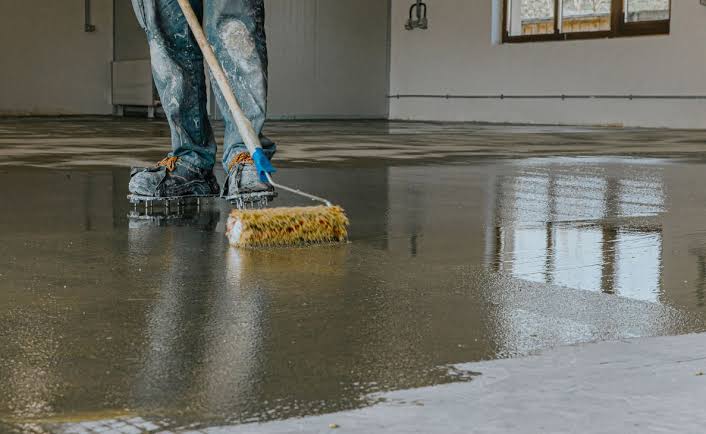
Epoxy coatings are used in demanding environments such as warehouses, factories, car parks, cleanrooms and other areas where surface protection is important.
The appropriate formulation depends on the application environment. For occupied or enclosed spaces, water-based and lower-VOC options may be considered where suitable. ASW supplies products including NEWKOTE 101 EP, a hybrid water-based epoxy coating described in the source as rapid-curing.
Sealants and Reinforcement Accessories
Sealants and reinforcement materials are important components of many waterproofing systems because joints, cracks, penetrations, drains and corners require careful detailing.
A supplier that can provide these supporting materials alongside the primary waterproofing system can simplify procurement and reduce the need to coordinate multiple sources. ASW supplies products such as Tritosil H40 PU sealant together with reinforcement accessories for detailing applications.
Why Does Supplier Selection Matter More for Specialist Materials in Singapore?
Singapore’s climate places ongoing demands on waterproofing and protective systems. Heavy rainfall, high humidity, strong UV exposure and daily temperature changes can place stress on coatings, joints and other exposed materials.
When an unsuitable material is selected or applied incorrectly, the problem may not become obvious immediately. Leaks, blistering, delamination, reinforcement corrosion or concrete deterioration may only become apparent after the work has been completed.
By that stage, the project may involve additional repair work, disruption and removal of finished materials.
This makes local application knowledge particularly relevant when sourcing specialist construction materials. A supplier that understands how products are expected to perform under Singapore conditions can provide more useful guidance than one that simply supplies a product from a catalogue.
For projects in locations with additional exposure considerations, such as industrial or coastal environments, project teams may also need to discuss the intended exposure with the supplier before selecting a system.
What Makes a Building Materials Supplier Reliable?
Supplier reliability is demonstrated through everyday performance rather than sales presentations. The most useful indicators include delivery consistency, documentation, technical support, product information and transparent communication.
A reliable supplier should be able to explain what it is supplying, provide the documentation required for project approval and communicate clearly about delivery commitments.
Supply Chain and Delivery Performance
A supplier’s relationship with manufacturers and its approach to stock planning can affect how reliably materials reach a project site.
Direct manufacturer relationships may help reduce delays associated with additional intermediaries, while effective stock planning can make it easier to respond when materials are needed urgently.
Delivery planning is particularly important in Singapore, where construction sites may have limited storage capacity, restricted loading windows and specific access requirements. A delivery that arrives at the wrong time can create unnecessary disruption for the site team.
A dependable supplier should therefore communicate realistic delivery commitments and inform the project team promptly if circumstances change.
Technical Documentation and Standards
Technical documentation is an important part of construction-material procurement, particularly when consultants or engineers need to review and approve products.
Depending on the material and project requirements, documentation may include technical datasheets, safety data sheets, application guidelines, information about applicable standards and relevant test reports.
For projects with specific environmental or certification requirements, buyers may also need to confirm whether the relevant product has the required certification or characteristics.
A supplier that can provide these documents clearly and promptly makes it easier for project teams to evaluate materials and prepare submissions.
Technical Support Based on Application Experience

Technical support becomes especially valuable when site conditions differ from the original specification.
A supplier with practical application knowledge may be able to identify issues involving substrate compatibility, damp concrete, existing coatings, primers or detailing before the material is applied.
This type of support can help project teams resolve questions earlier rather than discovering a material problem after installation has already begun.
Transparent Pricing and Ordering Flexibility
Clear pricing allows contractors and project teams to compare quotations more effectively and understand what is included in the supply arrangement.
Ordering flexibility is also useful. Contractors may need small quantities for urgent repair work on one project and larger volumes for scheduled construction works on another.
A supplier that can accommodate both types of requirements may be more practical for contractors managing different projects at the same time.
How Should You Choose a Building Materials Supplier Step by Step?
Choosing a supplier does not need to rely on the lowest quotation alone. A more reliable approach is to evaluate the supplier across several stages before placing the order.
Start by identifying the exact material and application requirements. For specialist products, this includes understanding the substrate, exposure and intended use rather than simply selecting a product category.
Next, ask which manufacturer produces the material and request the relevant technical datasheet and application information. Check whether the supplier can also provide compatible primers, topcoats, sealants or reinforcement materials where the system requires them.
The next step is to evaluate delivery capability. Ask how the supplier handles committed delivery dates, what happens if stock becomes unavailable and how changes are communicated.
Technical support should then be considered. Find out whether the supplier can assist with specification questions, substrate preparation or application issues before and after delivery.
Finally, confirm ordering arrangements, including whether the supplier can handle both urgent small orders and planned bulk deliveries.
This process gives buyers a more complete picture of supplier capability than comparing product prices alone.
What Are the Red Flags of an Unreliable Building Materials Supplier?
Several warning signs can appear before a procurement problem becomes a site problem.
One is incomplete technical information. If a supplier cannot clearly provide the product datasheet, application instructions or information supporting its performance claims, project teams may struggle to obtain approval or determine whether the material is suitable.
Another is vague delivery communication. A supplier that cannot provide a realistic delivery commitment or explain what happens when stock becomes unavailable creates uncertainty for site planning.
Inconsistent product information is another concern. Product descriptions, technical documents and recommendations should be consistent with one another. Buyers should be cautious when the supplier cannot clearly explain which products are compatible or where a particular material should be used.
A lack of practical technical support can also be a warning sign for specialist materials. If the supplier can only provide a product name and price but cannot discuss substrate compatibility, preparation or application requirements, the project team may be left to resolve important technical questions independently.
Finally, commitments that are only verbal can create avoidable disputes. Important information about product specifications and delivery arrangements should be confirmed in writing.
What Should You Ask a Building Materials Supplier Before Ordering?
Before committing to a supplier, ask which manufacturer produces the material and what standards, tests or technical information support its stated performance.
Request the technical datasheet, safety data sheet and application guidelines where applicable. If the product forms part of a waterproofing or protective system, ask which primer, topcoat, sealant or reinforcement materials are compatible with it.
Delivery should also be discussed clearly. Ask when the material can be supplied, whether the quantity is currently available and how the supplier will communicate any changes.
For technically sensitive materials, ask whether the supplier can provide support with specification review, substrate preparation or application questions.
Finally, clarify what happens if there is a product issue or if the material does not perform as expected. These questions can reveal whether the supplier is prepared to support the project beyond the initial transaction.
How Can Published Product Information Help You Evaluate a Supplier?
A supplier’s published information can provide an early indication of how seriously it treats technical communication.
Clear product pages, accessible datasheets and specific explanations of intended applications make it easier for buyers to compare materials and prepare submissions.
The quality of the information matters as much as the amount of information. A useful supplier should explain not only what a product is, but where it is intended to be used and what supporting components may be required.
When a supplier presents compatible primers, coatings, topcoats and sealants as part of a broader system, buyers can also better understand how the products relate to one another.
Inconsistent or incomplete information does not necessarily prove that a supplier is unreliable, but it is a reasonable reason to ask additional questions before placing an order.
How Do ASW’s Capabilities Support Contractors and Project Teams?
ASW is a Singapore-based supplier of waterproofing materials, protective coatings and construction chemicals. It operates from North Link Building on Admiralty Street and serves projects across Singapore and Southeast Asia.
Its product range covers waterproofing and cementitious coatings, primers and specialised topcoats, hybrid and water-based epoxy coatings, as well as sealants and reinforcement accessories.
ASW serves projects across commercial buildings and warehouses, manufacturing facilities and cleanrooms, and public infrastructure. These applications require different material considerations, making product selection and technical support important parts of the procurement process.
The company also works through direct manufacturer partnerships and provides support across product selection, specification checks, bulk delivery and installation guidance. Through its sister applicator company, ASW draws on more than a decade of hands-on experience in structural waterproofing, roof restoration and building envelope maintenance.
This application-based perspective allows the team to consider practical site conditions alongside the product specification, which can be particularly useful when contractors or engineers are dealing with difficult substrates, existing systems or demanding environmental conditions.
The Bottom Line
A building materials supplier in singapore should be evaluated as a project partner rather than simply as a source of products.
For contractors, engineers and project teams in Singapore, reliability involves several factors working together: consistent product quality, dependable delivery, complete technical documentation, compatible system components and practical support when site conditions require further consideration.
This becomes especially important for specialist materials such as waterproofing systems, protective coatings and structural repair products, where a seemingly small specification or application mistake can result in expensive rework later.
The best way to evaluate a supplier is therefore to look beyond the quotation. Request the relevant documentation, ask specific questions about compatibility and application, confirm delivery arrangements in writing and assess whether the supplier can provide meaningful technical support.
A supplier that can explain not only what it supplies but also where, why and how the materials should be used is better positioned to support a project from procurement through application.
Frequently Asked Questions
What should I look for in a building materials supplier in Singapore?
Look for consistent product quality, reliable delivery, complete technical documentation and practical technical support. For specialist materials such as waterproofing and protective coatings, application knowledge and system compatibility are particularly important.
What documentation should a building materials supplier provide?
Depending on the product and project requirements, documentation may include technical datasheets, safety data sheets, application guidelines, applicable standards information and relevant test reports. Projects with specific certification requirements may require additional documentation.
How do I know if a supplier is reliable?
Look at how clearly the supplier answers technical questions, whether it provides the required documentation, how it communicates delivery commitments and whether it can support the product during specification and application. Speaking with contractors or engineers who have worked with the supplier can also provide useful practical insight.
Should I choose the cheapest building materials supplier?
Price is an important consideration, but it should not be the only one. For specialist materials, an apparently cheaper product may create additional costs if it is unsuitable, delayed, incompatible with other system components or difficult to apply correctly.
Can a building materials supplier help with technical specifications?
Yes. Specialist suppliers may assist with product selection, substrate compatibility, specification checks, surface preparation and application guidance. The level of support varies between suppliers, so it is worth confirming what technical assistance is available before ordering.
Do building materials suppliers handle both small and bulk orders?
Many suppliers handle both urgent smaller orders and larger scheduled deliveries. Contractors should confirm minimum order quantities, stock availability and delivery arrangements before committing to a supplier.
What are the biggest red flags when choosing a supplier?
Common warning signs include incomplete technical documentation, vague delivery commitments, inconsistent product information and an inability to explain product compatibility or application requirements. Important product and delivery commitments should also be confirmed in writing.
Why are specialist building materials more difficult to source?
Specialist materials often form part of a larger system and require appropriate preparation and application. Waterproofing, protective coatings and repair systems can therefore require more technical consideration than general construction products.
Does Singapore’s climate affect material selection?
Yes. Singapore’s rainfall, humidity, UV exposure and temperature changes can place significant demands on exposed materials. The appropriate system should therefore be selected according to the project’s actual substrate, exposure and intended application.
What does ASW supply?
ASW supplies waterproofing and cementitious coatings, primers, specialised topcoats, hybrid and water-based epoxy coatings, sealants and reinforcement accessories for construction and building-maintenance applications.