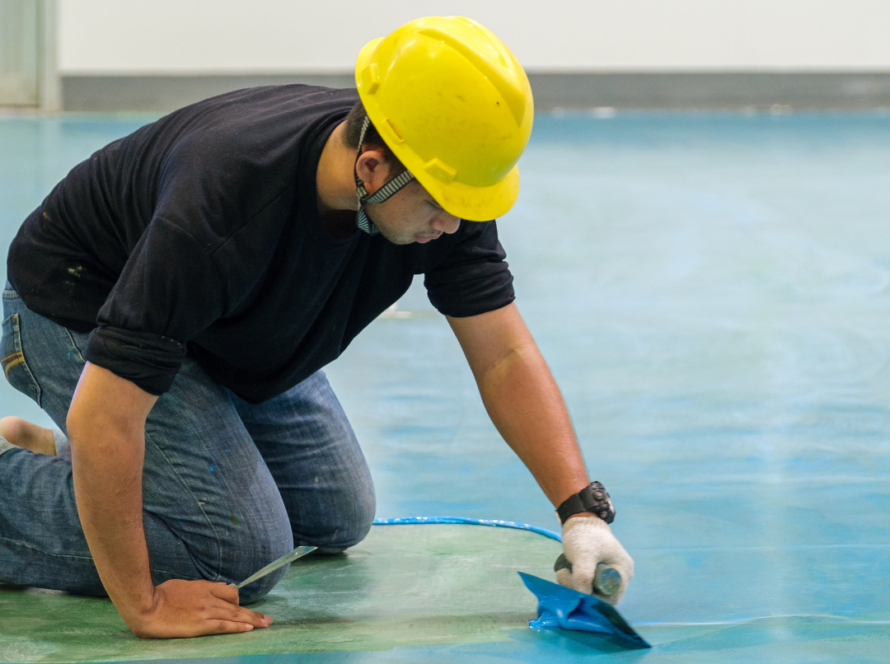
A concrete roof may look solid and permanent, but its surface contains pores, hairline cracks, joints and penetrations that can allow water to enter over time. In Singapore, frequent rainfall, high humidity, strong sunlight and temperature changes place additional stress on exposed concrete roofs. A small defect that initially causes only minor seepage can eventually contribute to dampness, corrosion of reinforcement, concrete cracking and spalling if it is left unresolved.
Concrete roof waterproofing is the process of creating a protective system that limits water from penetrating the roof slab and reaching the structure or areas below. Common approaches include liquid-applied polyurethane and hybrid urethane coatings, flexible cementitious systems, crystalline treatments and sheet membranes. The appropriate system depends on the roof’s condition, substrate, shape, exposure, usage and existing waterproofing rather than simply the material’s name.
For Singapore buildings, waterproofing should therefore be approached as a complete system rather than a single product. Surface preparation, crack repair, drainage, joints, penetrations, primer, coating thickness, curing and ongoing maintenance can all affect the final performance.
This guide explains why concrete roof waterproofing matters in Singapore, what causes leaks and waterproofing failures, how the main systems differ, when a roof needs repair rather than full waterproofing, what affects project cost, how installation should be carried out and how to maintain the completed system. It also explains how ASW supports contractors, engineers, facility teams and project owners with waterproofing materials and technical guidance.
Why Does Concrete Roof Waterproofing Matter in Singapore?
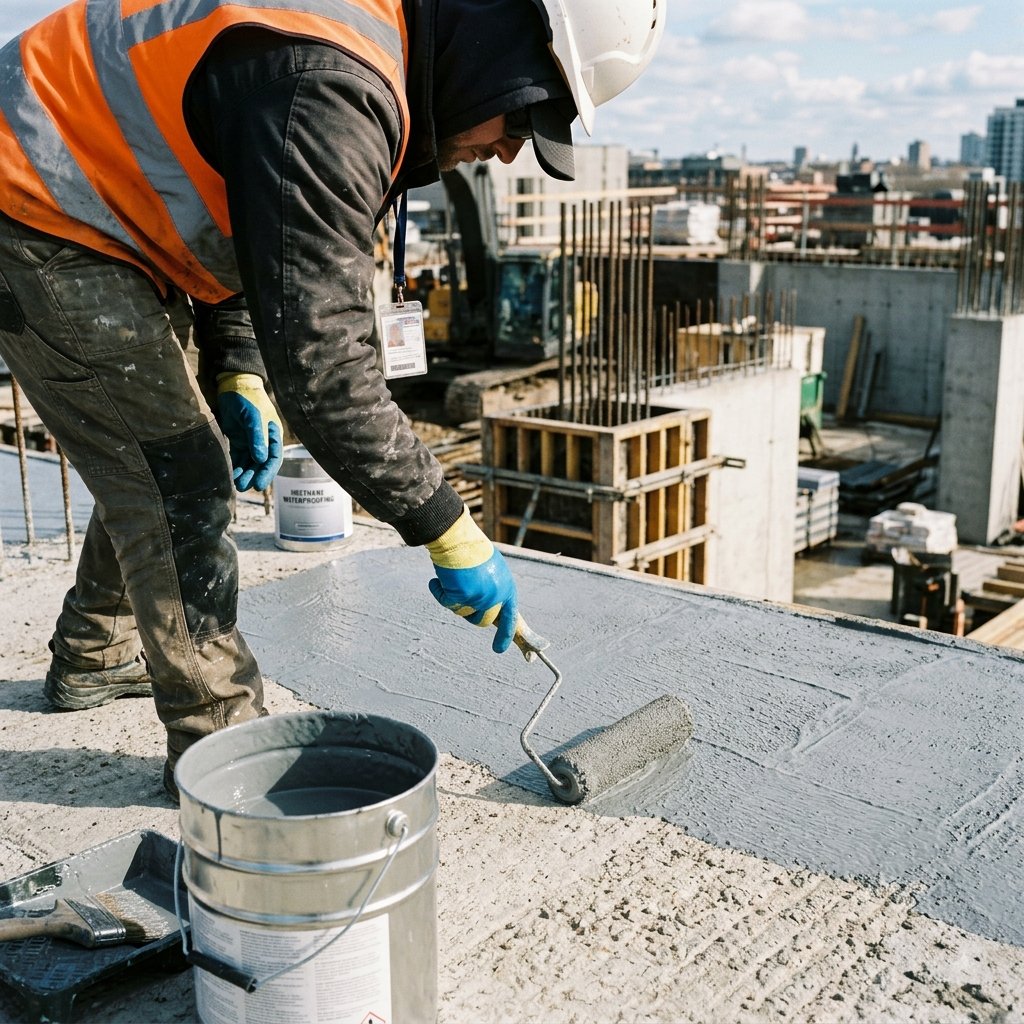
Concrete roof waterproofing matters because water entering a reinforced concrete slab can create problems beyond a visible ceiling stain. Persistent moisture can contribute to deterioration of the concrete and corrosion of the steel reinforcement, while repeated wetting and drying can worsen cracks, joints and other weak points.
Singapore’s tropical environment adds to this exposure. Heavy rain can place sudden loads on roof drainage systems, while high humidity can keep surfaces damp for longer. Direct sunlight and ultraviolet exposure can also accelerate the ageing of exposed coatings and sealants.
How Water Can Damage Reinforced Concrete
Reinforced concrete relies partly on its alkaline environment to protect embedded steel reinforcement from corrosion. Carbonation gradually reduces this alkalinity, while chlorides can also contribute to the breakdown of the protective environment around the steel, particularly in exposed or coastal conditions.
When moisture reaches reinforcement that has lost sufficient protection, corrosion can occur. Rust occupies more volume than the original steel, creating pressure within the surrounding concrete. Over time, this can contribute to cracking, delamination and spalling.
Waterproofing does not eliminate every possible cause of concrete deterioration, but limiting water ingress can reduce one of the major conditions that contribute to reinforcement corrosion.
The Practical and Financial Consequences
A leaking roof can affect much more than the roof surface. Water may damage ceiling finishes, paint, plaster, insulation, electrical equipment, stored goods and interior spaces. Persistent dampness can also encourage mould growth.
For commercial and industrial buildings, repeated leakage can disrupt operations and create additional maintenance work. For residential properties, water stains and damp ceilings can become particularly disruptive when leaks occur over bedrooms, living areas or other occupied spaces.
This is why addressing roof defects early is generally preferable to waiting until water ingress becomes widespread.
What Causes Concrete Roof Leaks and Waterproofing Failures?
Concrete roof leaks usually develop from a combination of defects rather than a single cause. Common problems include cracking, deteriorated joint sealants, poorly detailed penetrations, blocked drainage, ponding water and ageing waterproofing systems.
Cracking From Shrinkage, Heat and Movement
Concrete can shrink as it cures and continue to experience movement as temperatures change. An exposed roof is also subjected to daily heating and cooling, while structural movement and settlement can introduce additional stress.
Small cracks may initially appear insignificant, but they can provide pathways for water, particularly when they occur alongside ageing or deteriorated waterproofing.
This is one reason flexible waterproofing systems are often considered for exposed concrete roofs. A system with suitable flexibility may accommodate some movement more effectively than a rigid coating, although the actual choice should depend on the roof and substrate.
Joints, Penetrations and Upstands
Expansion joints, construction joints, pipe penetrations, vents, drain outlets, parapet junctions and roof upstands are common areas of vulnerability.
Sealants at these locations can harden, shrink or crack as they age. Poor detailing can also allow water to bypass an otherwise sound waterproofing layer.
A leak that appears in the middle of a ceiling may therefore originate from a roof penetration or joint some distance away, with water travelling through the structure before becoming visible indoors.
Poor Drainage and Ponding Water
Flat concrete roofs are normally designed with falls that direct water towards drainage outlets. If the falls are insufficient, the surface has settled unevenly or outlets become blocked, water may remain on the roof after rainfall.
Persistent ponding places additional stress on the waterproofing system and gives water more opportunity to find weaknesses in cracks, joints and detailing.
For this reason, waterproofing work should not focus only on the membrane. If recurring ponding is caused by drainage or falls, the underlying drainage issue may need to be addressed as part of the project.
Workmanship and Ageing
Waterproofing can fail prematurely when the surface is inadequately prepared, the substrate is too damp, primer requirements are ignored, the coating is applied too thinly or critical details are not properly treated.
Even a correctly installed system will eventually require inspection and maintenance. Exposure to sunlight, rain, foot traffic and other environmental conditions gradually affects coatings, sealants and protective layers.
Which Buildings in Singapore Need Concrete Roof Waterproofing?
Concrete roof waterproofing can be relevant to many types of Singapore buildings, including landed homes, condominium developments, commercial buildings, schools, healthcare facilities, warehouses, factories and other industrial properties.
It can also be important for exposed rooftop decks, podiums, multi-storey car parks, roof terraces and landscaped areas where concrete is exposed to weather or additional surface use.
The maintenance responsibility depends on the type of property. Landed homeowners generally manage their own roofs, while common roof areas in condominiums are normally managed through the property’s management structure. For commercial and industrial properties, responsibility typically sits with the owner, building management or facility team.
For residents who notice water ingress, the appropriate party to contact can therefore depend on whether the affected roof is private or part of a shared building structure.
What Are the Main Waterproofing Methods for Concrete Roofs?
There is no single waterproofing system that is suitable for every concrete roof. Selection should take into account the substrate, exposure, roof geometry, movement, foot traffic, drainage and condition of any existing waterproofing.
Polyurethane and Hybrid Urethane Coatings
Polyurethane and hybrid urethane coatings are liquid-applied systems that cure into flexible membranes. Their seamless application can be useful on concrete roofs with complicated shapes, penetrations, drains and upstands because there are no sheet seams across the main surface.
Their flexibility can also help accommodate some substrate movement and bridge suitable hairline cracks when the system is properly specified and applied.
ASW’s iKote range includes hybrid polyurethane and urethane systems such as iKote PU40 and iKote MT40X. The appropriate product depends on the project’s performance requirements, application conditions and intended use rather than simply choosing the most flexible option.
Flexible Cementitious Coatings
Cementitious waterproofing systems bond well to suitable concrete substrates. Traditional rigid cementitious coatings can be economical for appropriate applications, while polymer-modified versions provide greater flexibility.
ASW’s iKote CM 40X is an example of a polymer-rich flexible cementitious waterproofing system designed for concrete applications where cement-based adhesion and movement tolerance are important considerations.
Crystalline Waterproofing
Crystalline waterproofing works within the concrete rather than functioning solely as a surface membrane. Active chemicals react in the presence of moisture and can form crystalline structures that block certain water pathways within the concrete.
This approach can be useful where improving the water resistance of the concrete itself is part of the waterproofing strategy. For exposed roofs, however, the overall system may still require additional surface protection against UV exposure, movement and weather.
Sheet Membranes
Sheet membranes are manufactured in rolls and installed over the roof surface before the joints are sealed using methods appropriate to the particular membrane.
Their factory-controlled thickness can provide consistency across large, relatively straightforward roof areas. However, seams, corners, penetrations, drains and changes in level require careful detailing.
Roofs with numerous pipes, equipment bases and complicated geometry may therefore require more labour-intensive sheet installation than a suitable liquid-applied system.
Acrylic Coatings
Acrylic coatings can provide a relatively straightforward liquid-applied option for suitable applications and may also be used as protective finishes.
However, their flexibility and resistance to prolonged ponding and UV exposure vary by formulation. For demanding exposed concrete roofs in Singapore, the suitability of an acrylic system should therefore be assessed against the actual exposure conditions rather than assumed from its lower initial cost.
Protective Topcoats
A protective topcoat can form part of a complete waterproofing system by helping protect the underlying membrane from UV exposure, heat and surface wear.
Light-coloured or reflective finishes may also help reduce the temperature of an exposed roof surface. ASW supplies products such as SR COAT TC Flow for compatible applications.
A topcoat should not be treated as a standalone solution unless the manufacturer’s system specifically allows it. Compatibility with the underlying waterproofing layer is important.
Should You Repair a Concrete Roof Leak or Waterproof the Entire Roof?
Not every roof leak requires complete waterproofing.
A localised leak caused by a damaged sealant joint, isolated penetration or small surface defect may be addressed through targeted repair if the surrounding waterproofing remains sound.
A broader waterproofing project may be more appropriate when the roof has widespread cracking, repeated leaks, extensive delamination, deteriorated membranes or recurring ponding. If the existing waterproofing is failing across large areas, repeatedly patching individual leaks may only provide temporary relief.
The first step should therefore be an assessment of the roof’s condition. The objective is to identify the actual source of water ingress and determine whether repair, recoating or a more comprehensive replacement is appropriate.
How Should a Concrete Roof Be Prepared and Waterproofed?
A properly waterproofed concrete roof normally follows a defined sequence, beginning with assessment and preparation before the waterproofing material is applied.
The roof should first be inspected for cracks, damaged concrete, ponding, failed joints, deteriorated sealants and problems with existing waterproofing. Dust, oil, algae, moss, loose material and other contaminants should then be removed.
Where the existing membrane is blistered or delaminating, unstable sections may need to be removed rather than simply covered with a new layer. Cracks and damaged concrete should be repaired using materials compatible with the selected waterproofing system.
Why Moisture Control Matters
Moisture is particularly important in Singapore because rain can interrupt outdoor waterproofing work.
Many coating systems require the substrate to be sufficiently dry for proper adhesion. Work should therefore be planned around suitable weather conditions, allowing sufficient time for the roof to dry after rainfall and for the applied system to cure before further exposure.
Priming and Detailing
A suitable primer can improve adhesion between the substrate and waterproofing layer where required by the system.
Critical areas such as drains, pipe penetrations, upstands, corners and joints should receive appropriate detailing. Compatible sealants and reinforcement materials may be used where specified.
ASW supplies products such as Tritosil H40 PU sealant and related reinforcement accessories for applications where these materials are appropriate.
The main waterproofing layer is then applied according to the manufacturer’s specified number of coats and thickness. Application thickness matters because an apparently covered surface does not necessarily mean that the system has achieved its designed performance.
Curing and Quality Checks
The waterproofing system must be allowed to cure for the specified period. Rain, standing water or foot traffic before sufficient curing can affect the finished membrane.
For larger projects, visual inspection, thickness checks, photographic records and other quality-control procedures can help document the completed installation and support future maintenance or warranty discussions.
How Much Does Concrete Roof Waterproofing Cost in Singapore?
There is no reliable single price for concrete roof waterproofing because the cost depends heavily on the roof and the work required.
The main factors include the total roof area, condition of the existing concrete, amount of surface preparation, crack and concrete repairs, whether an existing membrane needs to be removed, the waterproofing system selected, number of coats, detailing around penetrations and drains, roof accessibility and project-specific performance requirements.
A straightforward roof with a sound substrate may require significantly less preparation than an older roof with extensive cracking, ponding or failed waterproofing.
For this reason, a professional site assessment is generally more useful than comparing a simple price-per-square-metre figure. A quotation should make clear what preparation, materials, application and associated repair work are included.
When Is the Best Time to Waterproof a Concrete Roof in Singapore?
Waterproofing work should be scheduled when there is sufficient dry weather for surface preparation, application and curing.
During wetter periods, contractors may need to work around weather forecasts and allow additional time between rainfall and application. Fast-curing systems can be useful for projects where shorter application windows are important, but they still need to be applied according to their technical requirements.
Rather than relying on a particular month as a universal rule, the condition of the roof and the actual weather window should guide project scheduling.
How Can You Maintain a Waterproofed Concrete Roof?
A waterproofed roof still requires maintenance. Regular inspections can help identify small defects before they become significant leaks.
A practical inspection should look for ponding water, blocked outlets, cracks, blisters, lifted edges, deterioration of the topcoat and ageing sealants around joints and penetrations.
Drains should remain clear of leaves, dirt, moss and other debris. Biological growth should also be removed appropriately so that moisture is not continuously trapped against the waterproofing surface.
Joints and sealants should be checked periodically because they naturally deteriorate with exposure. When a defect is found, repairs should use materials compatible with the existing waterproofing system.
Keeping dated photographs, inspection records and details of previous repairs can also make it easier to track deterioration and plan future maintenance.
How Does ASW Support Concrete Roof Waterproofing Projects?
ASW supports concrete roof waterproofing projects by supplying waterproofing coatings, cementitious systems, primers, protective topcoats, sealants and reinforcement accessories for contractors, engineers, facility teams and project owners.
The company operates from North Link Building on Admiralty Street and serves projects across Singapore and Southeast Asia. Its product range includes systems for waterproofing, concrete protection and related construction applications.
ASW also draws on practical experience through its sister applicator company, which has worked in structural waterproofing, roof restoration and building envelope maintenance. This experience allows the team to support projects beyond basic material supply, including product selection, substrate compatibility, specification discussions, bulk supply and application guidance.
For project teams, this can be particularly useful when the roof condition is complex and the appropriate waterproofing system depends on more than simply choosing a coating from a catalogue.
The Takeaway
Concrete roof waterproofing protects more than the roof surface. By limiting water ingress, a suitable waterproofing system can help protect the concrete slab, reduce moisture-related deterioration and safeguard the spaces and equipment beneath it.
For many exposed concrete roofs in Singapore, flexible and UV-resistant systems such as polyurethane and hybrid urethane coatings can provide practical advantages, but there is no universal best material. Flexible cementitious systems, crystalline treatments and sheet membranes can also be appropriate for specific conditions.
The most important factors are the condition of the existing roof, the substrate, drainage, movement, exposure, building use, preparation quality and ongoing maintenance.
Before choosing a system, determine whether the roof needs a local repair, recoating or more comprehensive waterproofing. A proper assessment can help prevent unnecessary work and ensure that the selected system is matched to the actual roof rather than chosen based solely on material type or initial price.
Frequently Asked Questions
How long does concrete roof waterproofing last in Singapore?
There is no universal service life for concrete roof waterproofing. Durability depends on the waterproofing system, application quality, substrate condition, UV and weather exposure, foot traffic and maintenance. The manufacturer’s system specifications should be used when estimating expected service life.
Can you waterproof a concrete roof during the rainy season in Singapore?
Waterproofing can be carried out during wetter periods if there is a suitable dry-weather window. The concrete generally needs to meet the moisture requirements of the selected system, and sufficient curing time must be allowed before rainfall or foot traffic.
What are the warning signs that a concrete roof needs waterproofing?
Common warning signs include recurring ceiling stains, damp patches, visible roof cracks, ponding water, blistering or peeling waterproofing, deteriorated joints, rust staining and spalling concrete. A professional assessment can determine whether the issue requires local repair or broader waterproofing.
How much does concrete roof waterproofing cost in Singapore?
The cost depends on roof size, substrate condition, preparation and repair requirements, existing waterproofing, system selection, accessibility, detailing and application requirements. An on-site assessment is normally needed to provide a meaningful quotation.
What is the best waterproofing material for a concrete roof?
There is no single best material for every concrete roof. Polyurethane, hybrid urethane, flexible cementitious systems, crystalline treatments and sheet membranes can each be suitable depending on the roof’s condition, exposure, movement, use and existing waterproofing.
Can new waterproofing be applied over an existing membrane?
It may be possible when the existing system is sound, properly bonded, sufficiently dry and chemically compatible with the proposed new system. If the existing membrane is badly blistered, delaminated or deteriorated, unstable sections may need to be removed before a new system is applied.
What causes concrete roof waterproofing to fail?
Common causes include poor surface preparation, excessive substrate moisture, inadequate priming, insufficient coating thickness, poorly detailed joints and penetrations, blocked drainage and lack of maintenance. Material incompatibility can also contribute to premature failure.
Does every concrete roof leak require complete waterproofing?
No. A localised leak caused by a failed joint, sealant or penetration may only require targeted repair when the surrounding waterproofing remains sound. Widespread deterioration, recurring leaks or extensive membrane failure may justify a larger waterproofing project.
How often should a concrete roof be inspected?
Inspection frequency depends on the building, roof exposure, waterproofing system and maintenance requirements. Regular inspections are useful for identifying blocked drains, cracks, deteriorated sealants and surface defects before they develop into larger problems. The appropriate schedule should be determined according to the building’s maintenance requirements and the system manufacturer’s recommendations.
What does ASW provide for concrete roof waterproofing?
ASW supplies waterproofing coatings, flexible cementitious systems, primers, protective topcoats, sealants and reinforcement accessories. It also provides technical guidance relating to material selection, substrate compatibility, specifications, supply and application requirements.